The Design determines the Behavior
The Emu Sp 12 was the first sampler (a device that could record small snippets of sound) dedicated to drumming.
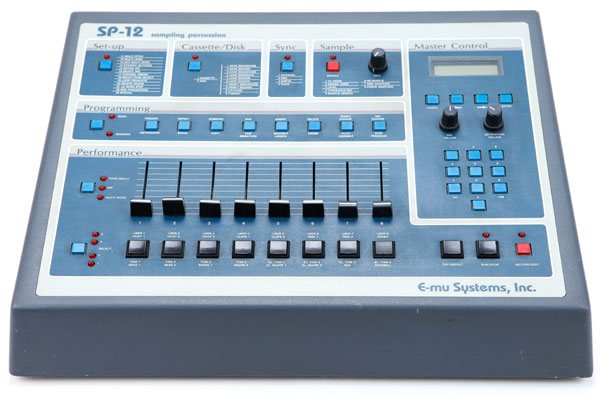
The SP-12
The SP12 allowed you to play sounds with plastic keys under the bank of faders (the sliders). A few years later they upgraded to the SP-1200
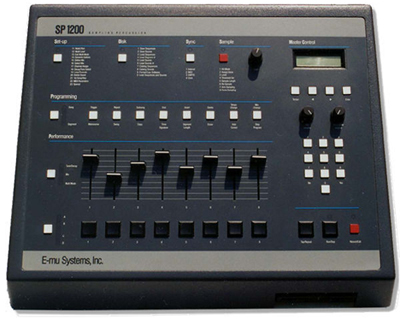
The SP-1200
Upgrading the SP-12
The overall layout of the controls was the same. The SP-1200 became the de-facto machine for making hip hop music. All of this set the stage for Roger Linn (another musical instrument innovator) to partner with Akai to make the MPC-60.
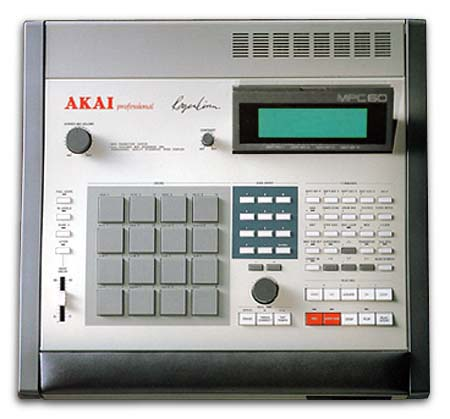
The MPC-60
A more player-centric sampling machine
The layout of the MPC made it clear that this was a machine for playing. A 4x4 grid of rubberized pads that allowed the user to tap out beats was a clear upgrade over the tiny buttons on the SP-1200. The MPC easily allowed the user to sample music and assign smaller portions to the pads. The easier workflow and the direct access to a sound changed music. The design of the interaction points altered what could be made. If you want to understand the power of the MPC just listen to DJ Shadow’s Endtroducing.
So why are we talking about MPCs and SP-12s? It is clear that a design alters the behavior of the user. This is so obvious that we really forget how our behavior is actively shaped by these things. The MPC unlocked a style of hip hop that didn’t exist before the creation of the MPC. So what lesson is there for designing behavioral systems?
Platforms create incentives which then drive choices. The protocols a platform chooses to implement already encode the final outcomes. If I let you anonymously review products on the internet, we know that the review page is rendered completely useless, where true signal is drowned out by noise. So, then you shift the rules: only verified purchaser can review. Then your adversary pays for purchases and then gets reviews. We always seem surprised when hearing about more and more elaborate schemes to subvert systems. But their fate is already written in their original design.
This is actually great news for designers like us: we can actually predict pretty accurately what will happen with specific protocols. So, how do we use this to our advantage?
Let’s look at some examples that are closer to platform problems. Spotify pays royalties to artists based on the number of plays a song gets. If you think more in terms of incentive threats and bad actors the problem is immediate: you can easily create tracks for Spotify and get plays, you will get money. And of course that is what we have: AI generated tracks, that are then listened to by “listener farms” that look like legitimate streams because they listen on actual hardware devices. It is also easy to imagine simple rules to generate human-like behavior, stopping a track at random times and the like.
A brief aside, Vulfpeck took advantage of this system as well. They released a completely silent album that they asked their fans to listen to while they slept. The proceeds from the plays went to financing a free Vulfpeck tour.
You can keep developing different detection approaches and continue to weed out bots. However, your adversary will keep innovating as well. So what is the way out? The bot outcome is inevitable based on the specific design of the payout scheme.
Where is the problem: at its core the issue is that subscription and ad revenue is placed in a pot and then distributed based on plays. There is a fundamental disconnect between what a subscriber pays and what the artist receives they listen to. An example will clarify.
I spend $10 on my subscription. I listened to one artist 100 times. The platform takes 30% off the top, so $7 left to be added to the pool. Let’s imagine there 1m subscribers, so the payout pool is $7,000,0000 and let’s say there were 1,000,000,000 streams. So each stream will get $0.007. So for my fav artists this nets out to about 0.007*100= 0.7 to my favorite artist. What happens with the remaining $6.30? That money is just shifted to other artists with a greater play count.
It’s obvious now: there is no direct connection between the subscription payment and the artist I listened to. So, why not create a direct transfer? Why not have a your subscription payment be distributed only to the artists you listened to? In this world, continuing the example above, my favorite artist will take my entire residual subscription amount, $7. If I had listened to more than one artist we could simply take the fraction of plays each artist got from me and split the $7 that way. Now the value I am getting from the platform is directly compensating the parties responsible for generating the revenue.
As another benefit we actually prevent the bad outcomes with bots. A bot farm can now only earn its own subscription payments back. It can never access more than what its subscription paid for. Each subscriber pays directly for the artist. There is no cross subsidization of artists.
Taylor Swift gets paid the same way. Under user-centric payouts, a superfan can only give Taylor Swift her own subscription charge. She cannot create a spike in streams that redirects money from other subscribers' pools. The current Spotify model
Is it any wonder then that our the music industry is dominated by a few artists who are literally getting paid by listeners who don’t care about them? It is not an accident, it follows directly from the model. Now let’s be clear. This shift means a total shift in the business of music streaming. A move to user centric payouts means that in equilibrium things will move, the total pool may shift, or artists will drop out. Is this a problem? Does this alter the nature of the music business? Yes, it does and there is a reason Spotify has not changed its model.